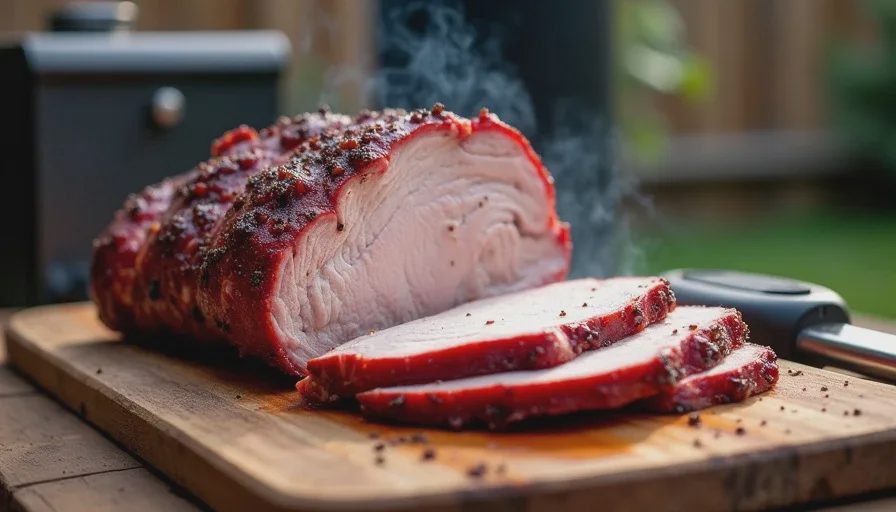
These BBQ competition tips for home cooks come from three seasons of entering local and regional cook-offs around Central Texas. I've won People's Choice and Best Sauce — nothing huge, nothing on the circuit — but enough to know what works in a contest and what actually matters at home. The gap between those two things is wider than most people think. Some competition tricks will make your backyard brisket noticeably better. Others will waste your money and overcomplicate a Saturday cook. Here's what I've learned.
What Competition Taught Me
Competition BBQ is a different animal. You're cooking for judges who take one bite, score it, and move on. The flavor profile that wins a contest — heavy salt, aggressive smoke, bold sauce — isn't necessarily what your family wants on a Tuesday night. But the technique? The technique is real. Competition cooks nail their temperatures, their timing, and their consistency because they have to turn in a product at a specific minute. At home, you have more flexibility, but the discipline still pays off.
Cooking for Judges vs. Cooking for Family
Judges want intensity. They're eating small bites of six different briskets, and yours needs to stand out in that line. That means more salt, more rub, more smoke than you'd want on a full plate. Cooking for family is different — your people are eating a full portion, and they want balance. The trick is taking the technique from competition and dialing back the intensity for the dinner table.
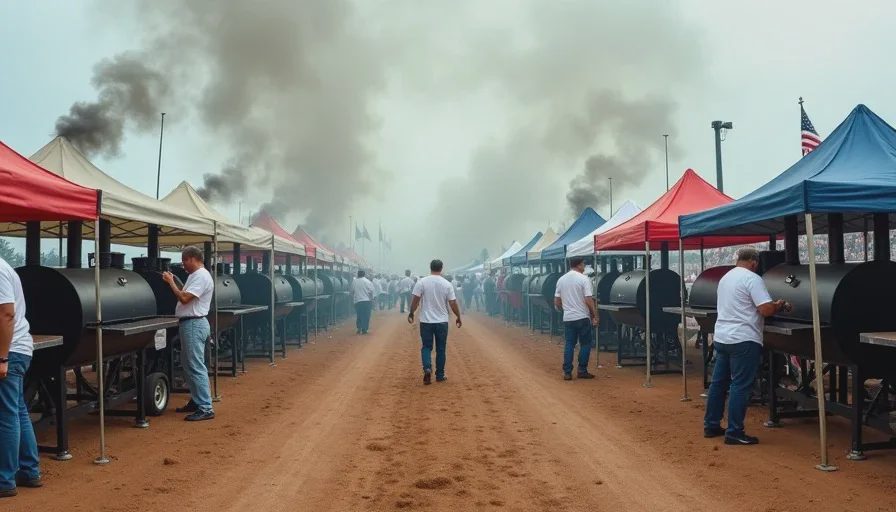
The 5 Tricks Worth Stealing
These five things changed my home cooking after I started competing. Each one comes from something I got wrong at a contest first. These are BBQ competition tips for home cooks that actually translate to the backyard.
Resting Meat Longer
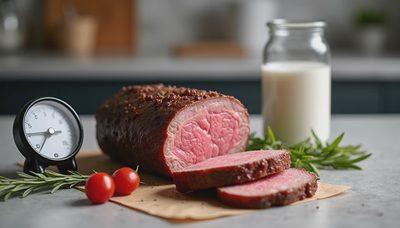
I used to pull a brisket off the smoker and slice it within 20 minutes. Dry, dry, dry. In competition, you rest brisket in a warm cooler for at least an hour — sometimes two. The internal temp equalizes, the juices redistribute, and the meat holds together when you cut it. At home, I rest every brisket for at least 90 minutes in a pre-warmed cooler wrapped in butcher paper. It's the single biggest difference between my old brisket and my current one.
Proper Thermometer Use
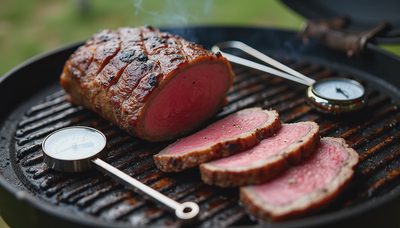
I cooked for two years with a dial thermometer that came free with the smoker. It was 25 degrees off. I didn't know because I never checked it. Competition forced me to calibrate — you can't turn in brisket at 198°F if your thermometer reads 225 when it's actually 248. Buy a probe thermometer, test it in boiling water (212°F at sea level, a bit lower at Lockhart's elevation), and put the probe in the thickest part of the flat. Sam calls it the "meat thermometer" and treats it like a toy, but he's not wrong — it is the most important tool I own.
Fat Cap Trimming
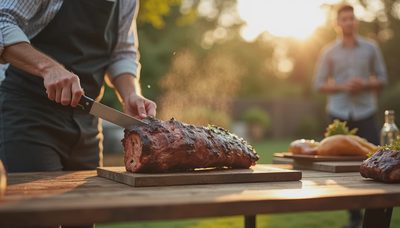
In competition, you trim the fat cap to about 1/4 inch. Too much fat and the rub can't penetrate; too little and the meat dries out. I brought this home and it made a difference. A 1/4-inch fat cap renders during the cook, bastes the meat from the top down, and gives you something to slice off if you want leaner pieces. I trim with a boning knife while the brisket is cold — warm fat is slippery and you'll cut too much.
Wrap Timing
Competition cooks wrap brisket in butcher paper at the stall — when the internal temp hits 165°F and stops climbing. This pushes through the stall and protects the bark. I use this at home and it works. But the key is timing: wrap too early and you get mushy bark; wrap too late and the flat dries out. 165°F is the number. I set a temperature alarm for it now, and Kate rolls her eyes every time it goes off, but that alarm has saved more briskets than I've ruined.
Sauce Application Timing
I used to sauce everything early — painted it on during the last hour of the cook. In competition, you sauce at the end and let it set over heat for 10-15 minutes, just enough to tack up. The sugar caramelizes lightly and sticks to the meat instead of soaking in and making the bark soft. At home, I pull the meat off the smoker, brush on a thin layer of sauce, and put it back on for 10 minutes. Glazed, not soggy.
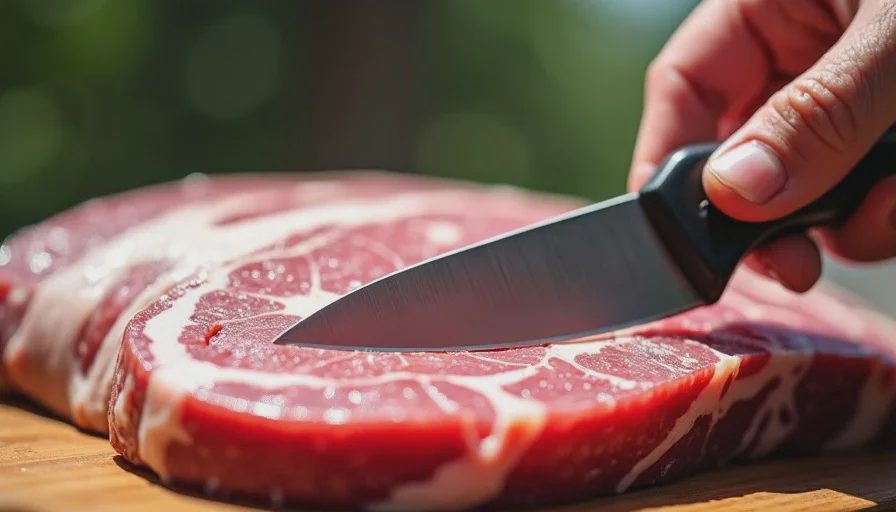
The 3 Tricks to Leave at the Contest
These three things I see home cooks copy from competition, and they shouldn't. They cost money, time, or flavor without giving you anything back. If you're working on a Texas brisket recipe for beginners, skip these entirely.
Overspending on Injections
Competition cooks inject brisket with beef broth, Worcestershire, and butter. It works in a contest because judges eat one bite and the injected flavor pops. At home, injecting is overkill. A good rub and a long cook give you all the flavor you need. I spent $40 on an injection kit and used it three times before I went back to no-injection brisket. The family couldn't tell the difference, and neither could I after the first bite.
Worrying About Turn-In Box Appearance
In competition, you build a turn-in box — kale garnish, precise slice angles, uniform pieces. It's presentation. At home, nobody cares what the slices look like on the cutting board. They care what they taste like. I've seen guys spend 30 minutes arranging a platter for their family. Your family wants to eat. Put the brisket on a board, hand them a knife, and go sit down.
Competition Rubs That Are Too Salty
Competition rubs are heavy on salt because salt is what judges pick up in a single bite. Put that same rub on a brisket you're going to eat a full plate of, and it's too much. I bought a competition rub that won at a contest, used it at home, and Kate said it tasted like "eating a saltine with smoke on it." She wasn't wrong. For home, cut the salt in your rub by a third, or use a home-style rub with less sodium and more pepper.
Quick Reference: What to Keep, What to Skip
Keep at home:
Resting brisket 90+ minutes in a warm cooler
Probe thermometer calibrated and placed in the flat
Fat cap trimmed to 1/4 inch
Wrap at 165°F internal temp
Sauce at the end, 10 minutes back on heat
Leave at the contest:
Injection systems (unless cooking for 30+ people)
Turn-in box presentation and garnish
Heavy-salt competition rubs for full-portion eating
The Comparison Table
Trick | Works at Home? | Why |
|---|---|---|
Resting meat 90+ min | Yes | Juices redistribute, meat stays moist |
Probe thermometer | Yes | Consistent temps, no guessing |
Fat cap to 1/4 inch | Yes | Renders well, rub penetrates |
Wrap at 165°F | Yes | Pushes through stall, protects flat |
Sauce at the end, 10 min on heat | Yes | Glazed finish, not soggy |
Injection systems | No | Overkill for family portions, expensive |
Turn-in box presentation | No | Wastes time, family doesn't care |
Heavy salt competition rubs | No | Too salty for full portions |
The Difference That Matters
Cooking for judges taught me precision. Cooking for my family taught me restraint. The five tricks I kept are about technique — temperature, timing, and trimming. The three I dropped are about intensity — more salt, more flavor injections, more presentation. At home, you're feeding people who love you, not scoring points with strangers. Use the discipline, skip the excess, and your Saturday brisket will be something people remember for the right reasons.
Good smoke. Good sweets. Good people.
No notes yet — write the first one.