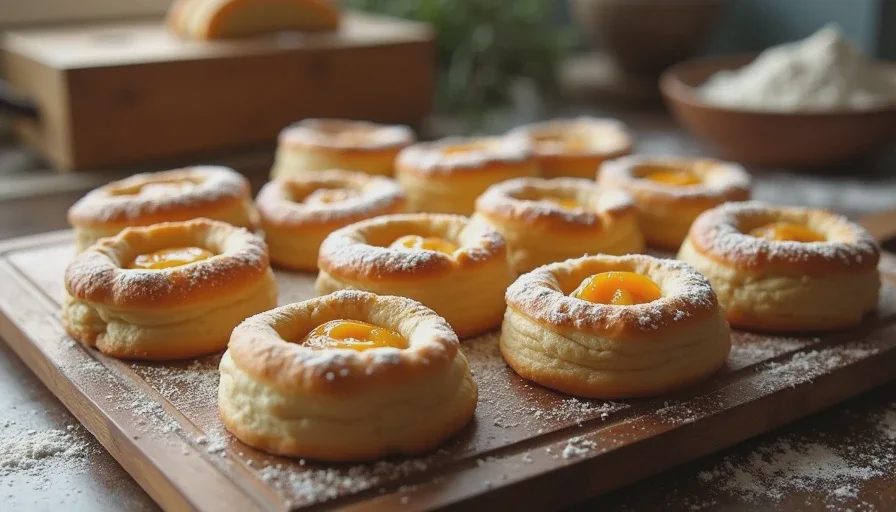
A proper kolache recipe Central Texas style should give you a soft, pillowy dough that tears like a cloud and holds a filling generous enough to taste in every bite — and if yours keep coming out like dry dinner rolls with a dab of fruit on top, I can tell you exactly where the recipe is failing. My mother's recipe card, sitting in the flour-dusted binder on our kitchen counter, has three things most online recipes get wrong: the dough hydration, the filling ratio, and the oven temperature. Fix those three and your kolaches transform from something polite to something people actually remember.
Why Most Kolache Recipes Fail
The Three Things That Go Wrong
I've baked my mother's kolache recipe Central Texas style maybe forty times in the last three years, and I've made every mistake there is. Here's what kills a kolache:
The dough is too dry. Most recipes call for flour by volume, and if you scoop it packed, you end up with a stiff dough that bakes into something closer to a bread roll than a kolache. The fix is weighing your flour and adding enough milk and butter to get a soft, slightly tacky dough that's still workable.
The filling is too sparse. A kolache should be mostly filling with dough wrapped around it, not a roll with a thumbprint of fruit. My mother's card says "fill to the brim" and she meant it. Most recipes give you a tablespoon of filling per kolache. You need three.
The oven is too hot. 400°F bakes the outside before the inside is done, and you get a dry crust with a gummy center. Drop it to 350°F and the dough bakes evenly, staying soft all the way through.
Texas Kolaches vs Czech Originals
The kolaches we make in Central Texas are descended from Czech immigrants who settled this area in the 1800s, but they've evolved. Czech kolaches are typically large, open-faced rounds with a generous well of filling and a crumb topping called posypka. Texas kolaches — the ones you find at every gas station from here to Austin — are often smaller, sometimes shaped into little purses, and sometimes savory. The sausage-and-cheese kolache is a Texas invention that would horrify a Czech grandmother.
My mother's recipe splits the difference: open-faced rounds, generous filling, sweet enriched dough. That's what I'm giving you here.
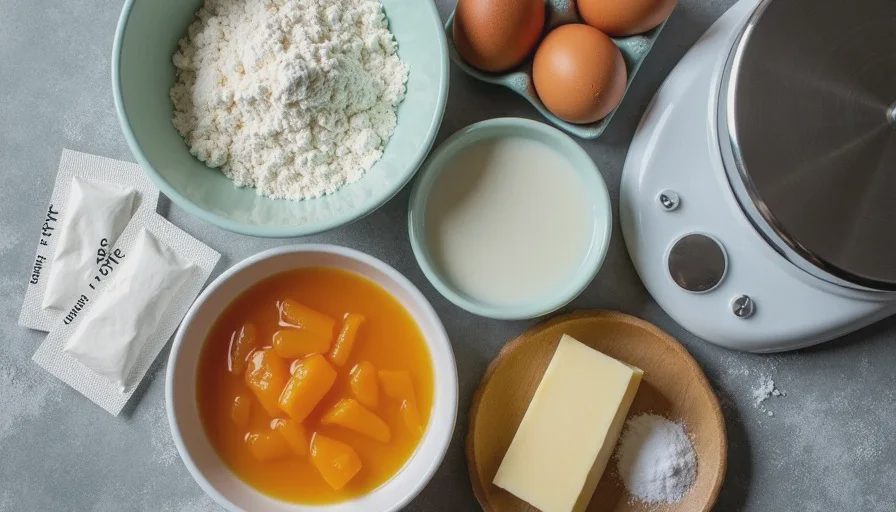
The Recipe From the Binder
Ingredients
June helped me measure these last Sunday morning, standing on her step stool with flour on her nose. She's nine and already better at leveling a measuring cup than I was at twenty.
Ingredient | Amount | Notes |
|---|---|---|
All-purpose flour | 4 cups (520g) | Weigh it if you can — scooping packs flour |
Whole milk, warm | 1 cup (240ml) | 100–110°F, warm to touch but not hot |
Active dry yeast | 2¼ tsp (1 packet) | Check expiry — old yeast won't rise properly |
Granulated sugar | ⅓ cup | Gives the dough its sweetness |
Large eggs | 2 | Room temperature |
Unsalted butter, melted | ⅓ cup | This is what makes the dough enriched and tender |
Salt | 1 tsp | Don't skip — salt regulates yeast activity |
Fruit filling (apricot or prune) | 1½ cups | Homemade or high-quality canned |
Cream cheese filling | 1 cup | Optional — for a Texas-style variation |
Powdered sugar | For dusting | Applied after baking, while still warm |
The Dough Timeline
Step | Time | What's Happening |
|---|---|---|
Mix and knead | 10 minutes | Combine wet and dry, knead until smooth and elastic |
First rise | 60 minutes | Dough doubles in a warm, draft-free spot |
Punch down and portion | 10 minutes | Divide into 12 balls, place on parchment-lined sheet |
Second rise | 30 minutes | Balls puff up and almost touch each other |
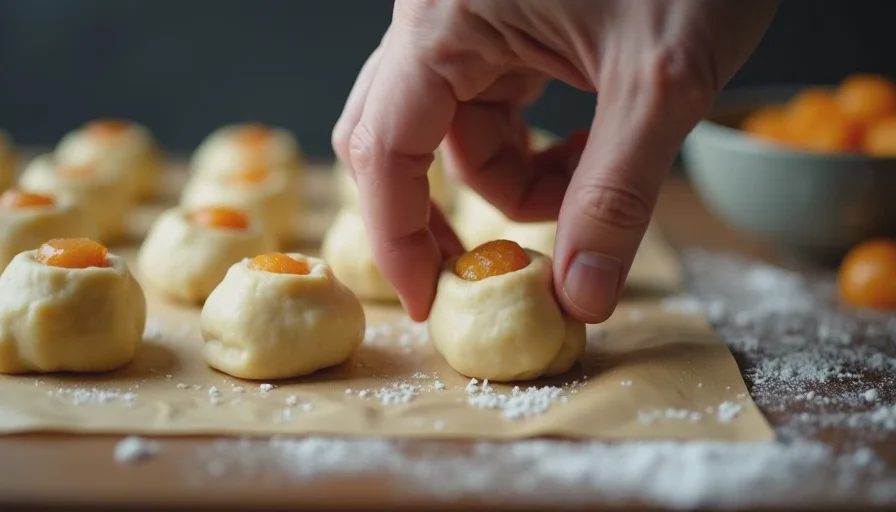
Shape and fill | 15 minutes | Make deep wells, fill to the brim |
Bake | 18–22 minutes | 350°F until golden on top |
Cool and dust | 10 minutes | Powdered sugar while still warm |
The Techniques That Make the Difference
Dough Hydration Is Everything
When you mix this dough, it should feel soft and slightly sticky — not wet, not tacky enough to coat your fingers, but soft enough that when you press a finger in, the indentation fills back in slowly. If the dough feels stiff and dry, add milk a tablespoon at a time. If it's too wet to hold a shape, add flour a tablespoon at a time. I've taught June to look for what her grandmother's card calls "a baby's cheek" — smooth, soft, yielding.
The enriched dough is what separates a kolache from a dinner roll. The milk, eggs, and butter add fat and moisture that keep the crumb tender. A lean dough — just flour, water, yeast, and salt — will never give you the soft texture a kolache needs. This is the same principle behind my mother's pecan pie recipe with flaky crust: fat is what creates tenderness, and you can't shortcut it.
Filling to the Brim
When you shape the kolaches, press a deep well into each dough ball using your thumb or the back of a spoon. The well should go almost to the bottom of the ball. Then fill it. Not halfway — all the way to the top. The filling will sink slightly during baking as the dough rises around it, so if you start with a shallow well and a modest amount of filling, you'll end up with a dry roll with a smear of fruit on top.
My mother's card has a margin note in her handwriting: "Don't be stingy. People remember the filling." She was right. Every kolache I've ever had that disappointed me was stingy with the filling. Three tablespoons per kolache, minimum. The dough will hold it — that's what the second rise is for, building structure.
Oven Temperature — 350°F, Not 400°F
This is the simplest fix and the one most recipes get wrong. At 400°F, the outside of the kolache bakes hard before the inside finishes. At 350°F, the dough bakes evenly and stays soft. You want golden on top — not dark brown, not pale white. Start checking at 18 minutes. If the tops are golden and the dough springs back when you press gently with a finger, they're done. Take them out. Don't leave them in "for a few more minutes just in case." That's how you get dry dinner rolls.
What June and I Learned Together
June asked me last Sunday why the kolaches at the gas station taste different from ours. I told her it's the same three things: their dough is leaner, their filling is sparser, and they're baked hotter and faster for production. She nodded and said, "So Grandma's recipe is just... more of everything?" That's about right. More butter, more filling, more patience on the temperature.
The flour-dusted binder sits on our counter because I use it constantly. My mother's handwriting is on the card, and my probe thermometer notes and timing charts are in the margins alongside her instructions. June has started adding her own notes — last week she wrote "more apricot next time" in purple pen. I left it there. If she's writing in the binder, she's paying attention, and that's how this thing stays alive.
Good smoke. Good sweets. Good people. That's what the binder is really about — passing something down so the next person standing at the counter can make it their own.

No notes yet — write the first one.