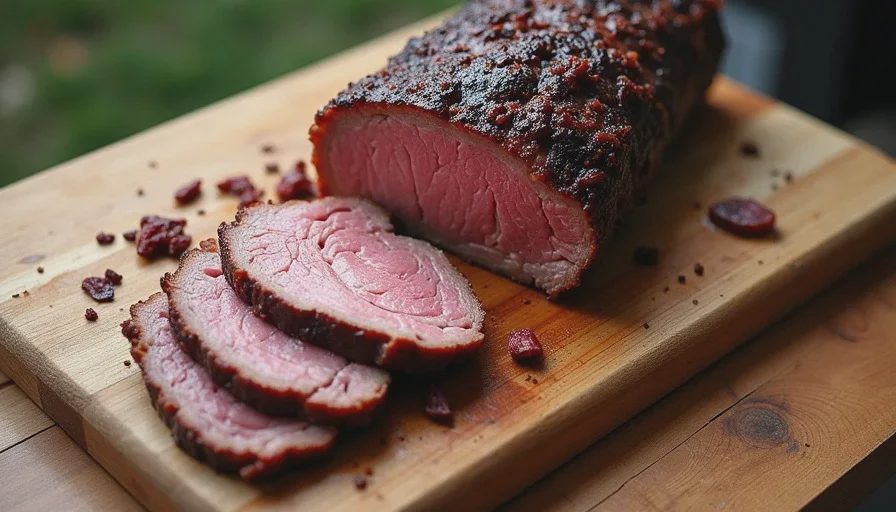
Ninety dollars. That's what I spent on a prime packer brisket from the butcher in Lockhart, and that's what I dried out on a Saturday in February because I made four specific mistakes I should have known better than to make. If you're searching for brisket dry — what went wrong, I'm going to tell you exactly what killed mine, because the post-mortem is more useful than another success story. I didn't wrap it, I didn't account for the stall, I pulled it at 190°F instead of 203°F, and I sliced it twenty minutes after it came off the smoker. Every one of those decisions cost me money and meat, and I'm writing this so they don't cost you the same.
The Setup — What I Was Working With
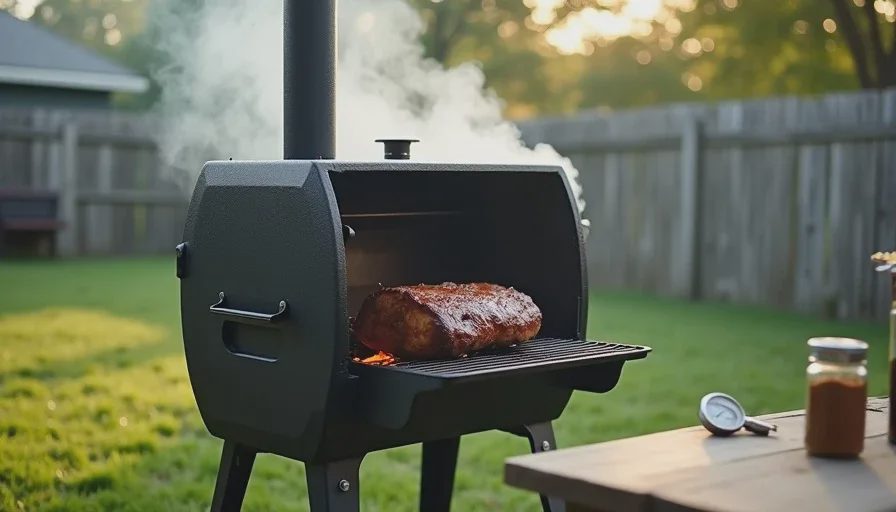
It was a 14-pound prime packer brisket from Hometown Meat Market — the kind with good marbling in the flat and a thick fat cap on top. I'd cooked briskets on Old Hoss before, my grandfather's cast-iron offset smoker, but this was the most expensive one I'd ever bought. I was cooking it for Kate's birthday lunch with her parents coming over, and the pressure got to me. I deviated from my usual process in four specific ways, and each deviation compounded the next until the brisket was unsalvageable.
What I Did (Step by Step)
I lit the firebox at 5 AM, got the smoker stabilized at 250°F, seasoned the brisket with salt and pepper, and put it on fat-side up at 5:45. So far, so good. Then things went sideways. Here's exactly what I did wrong, in order:
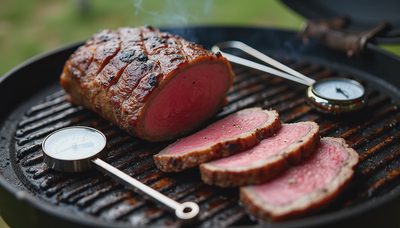
Skipped the probe in the flat. I put a probe in the point but not the flat, because the flat is harder to reach and I was being lazy about it. The flat is the part that dries out first, and I was flying blind on it.
Didn't wrap. I'd run out of butcher paper the week before and kept forgetting to buy more. I decided to cook the brisket naked through the entire stall, which is the equivalent of leaving the front door open during a thunderstorm.
Pulled at 190°F. The point probe hit 190°F and I panicked because Kate's parents were arriving in an hour. I pulled the whole brisket off the smoker instead of waiting for the flat to hit 203°F.
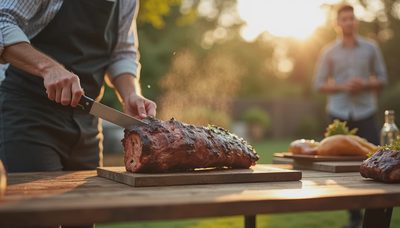
Sliced after twenty minutes. No cooler, no towel, no rest. Straight from the smoker to the cutting board to the table, and every drop of juice went with it.
The Diagnosis — Four Things Killed This Brisket
Four mistakes, and each one compounded the next. The brisket didn't die from one fatal error — it died from four smaller ones that added up to a $90 pile of dry meat. Here's the post-mortem:
Mistake | What Happened | What It Did to the Meat |
|---|---|---|
No probe in the flat | Didn't know the flat's actual temperature | The flat overcooked while the point was still rendering |
Didn't wrap | Brisket ran naked through a 3-hour stall | Moisture evaporated continuously, drying surface and interior |
Pulled at 190°F | Collagen hadn't fully broken down | Meat was tough and dry at the same time — the worst combination |
No rest | Juices had no time to redistribute | Every slice bled out onto the board, leaving the meat parched |
The Stall I Ignored
The stall is where this brisket died, and it's the thing I want anyone reading this to understand. Around 165°F internal, the moisture evaporating from the meat surface cools it down, and the temperature plateaus. It can sit there for two, three, sometimes four hours. I'd heard about the stall — I'd even lived through it on previous cooks — but I was watching the clock instead of the thermometer. The brisket sat in the stall for almost three hours with no wrap, losing moisture the entire time. By the time it climbed past the stall, the flat was already damaged. Pulling at 190°F just sealed the deal.
If I'd wrapped in butcher paper at 165°F, the stall would have been cut to forty-five minutes and the moisture would have stayed in the meat. If I'd waited until 203°F, the collagen would have rendered into gelatin and the meat would have been tender even with the other mistakes. The rest would have given the juices time to settle back into the fibers. Any one of those fixes might have saved it. I made none of them, and that's the part that still stings.
What to Do Instead — The Checklist
Here's what I do now, every single cook, because this brisket taught me that skipping steps is how you waste ninety dollars. This is a Texas brisket recipe for beginners in its simplest form — not a recipe so much as a set of rules I follow because the alternative is another post-mortem:
Put a probe in the flat AND the point — the flat cooks faster and dries out first
Wrap in butcher paper at 165°F internal — it cuts the stall short and holds moisture in the meat
Pull at 203°F internal — not 190°F, not 200°F, 203°F is where the collagen breaks down and the meat gets tender
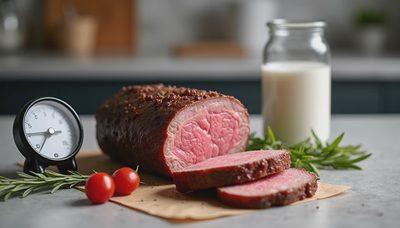
Rest in a cooler wrapped in a towel for at least one hour — two hours is better, and I'm not joking about that
If you're running out of time, rest longer and serve later — don't pull early to save the schedule, because dry brisket served on time is still dry brisket
That last one took me a long time to accept. Kate's parents waited an extra forty-five minutes for lunch that day, and the brisket was still bad. I'd rather make people wait and serve them something worth eating than pull early and hand them a plate of shoe leather with a smile.
The Emotional Math of Ruining Good Meat
Here's the part nobody puts in a brisket guide: the feeling. You spend ninety dollars on a piece of meat. You wake up at 4:30 AM. You tend a fire for twelve hours while your neighbors are still asleep. Your kids come outside to check on the smoke, and Sam asks if it's done yet, and you say "almost, buddy" because you don't want to tell him you think you're losing it. Kate's parents arrive, and you carry the brisket inside on a cutting board like it's a trophy, and you slice into it, and the knife goes through with no resistance — which should feel good but doesn't, because dry meat offers no resistance. The slices look right. The smoke ring is there. But the first bite tells the whole story, and June puts her fork down and asks if there's leftover chicken in the fridge.
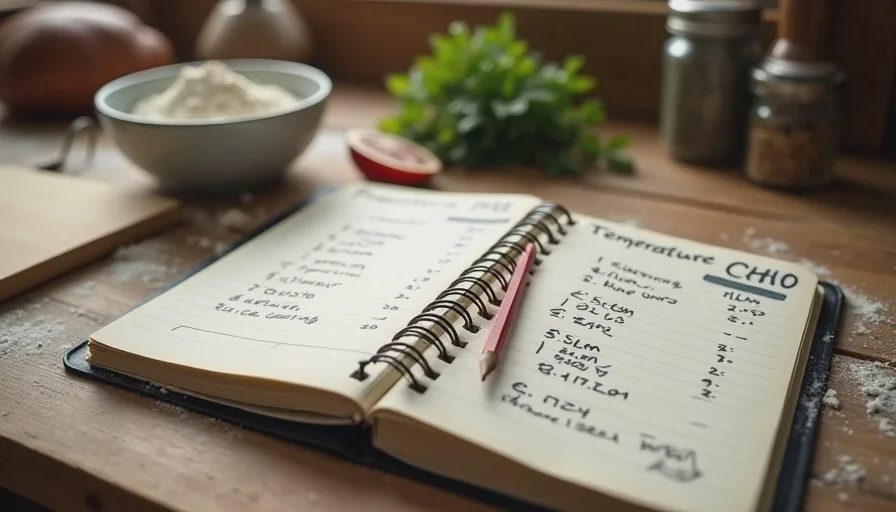
That was the cook that made me start writing things down. The flour-dusted binder on my counter — my mom's pie crust cards — now sits next to a notebook full of brisket temperatures, wrap timings, and rest durations. Every failure has a margin note. Every success has three exclamation points and a date. The notebook isn't pretty, but it's honest, and it's the reason the next brisket I cooked three weeks later came out the way it was supposed to. I still think about that $90 brisket more than I think about the ones that worked. Failure is a better teacher than success, and the tuition is expensive. Good smoke. Good sweets. Good people.
No notes yet — write the first one.