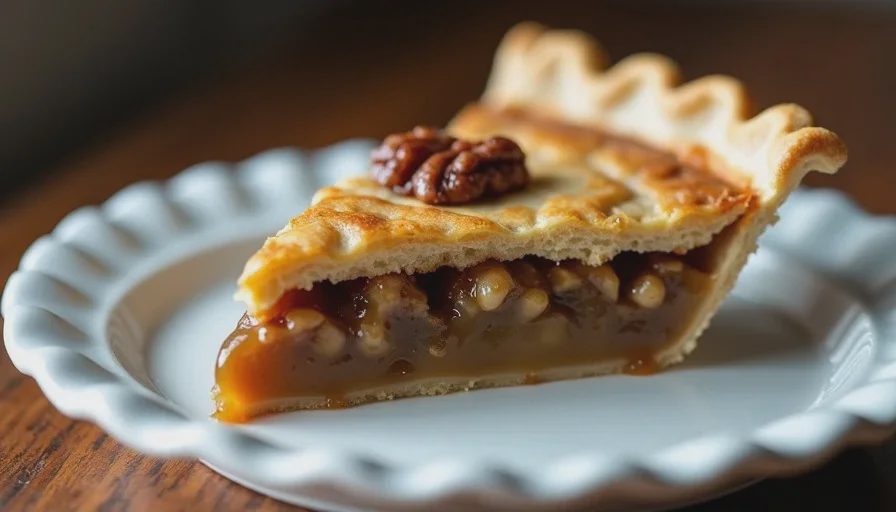
My mom's pecan pie recipe with flaky crust sat in a flour-dusted binder on my kitchen counter for six years before I could actually make the crust work. The recipe card is in her handwriting — neat, small, with a coffee stain in the corner — and it says "cold butter" like that explains everything. It doesn't. I ruined more pie crusts than I can count before I figured out that "cold" isn't a vibe, it's a temperature, and the probe thermometer I'd been using for brisket was the tool that finally bridged the gap between her recipe and my results. This is a barbecue + baking blog because the same instrument that saves my brisket saves my pie crust, and I'm not too proud to admit it took me years to notice.
Why the Crust Is the Hard Part
The filling is the easy part. Pecan pie filling is sugar, butter, eggs, corn syrup, vanilla, and pecans — you mix it, pour it, and bake it. The crust is where everything falls apart, literally. I'd follow my mom's card to the letter: flour, salt, shortening, butter, ice water. Cut in the fat, add water a tablespoon at a time, form a disk, chill, roll. Every step is straightforward on paper. But my crusts kept coming out tough and flat, and I couldn't figure out why until I started paying attention to the butter temperature instead of just the recipe steps.
The Science of Cold Butter
Here's the deal: flaky crust happens when pockets of cold butter melt inside the dough during baking, leaving behind layers of air. If the butter is too warm when you're working the dough, it blends into the flour instead of staying in distinct pieces, and you get a crust that's more like a cracker than a flake. My mom's card said "cold butter" and I was taking butter straight from the fridge at about 45°F, but by the time I cut it into the flour with my warm hands, it had warmed to 55°F or higher. The dough looked right. The butter was wrong.
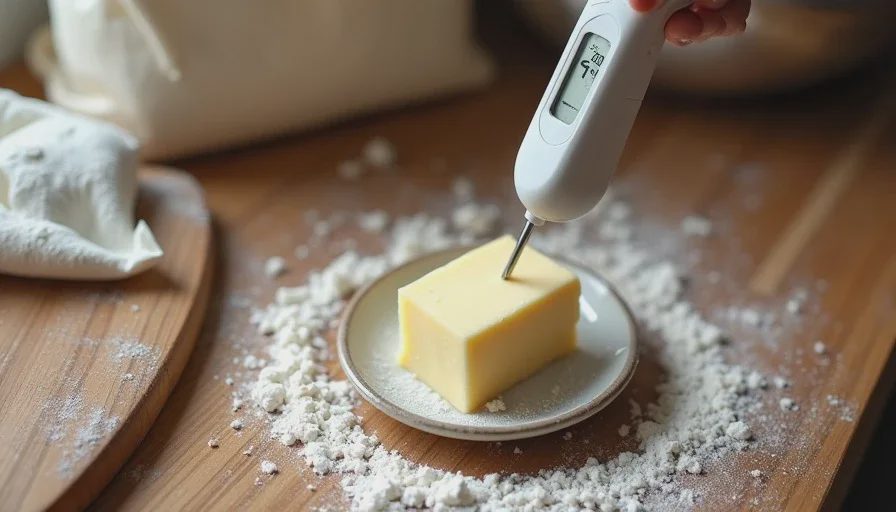
The probe thermometer fixed this instantly. I stick the probe into the butter before I start cutting it in, and if it reads above 40°F, back in the fridge it goes. I check the dough temperature halfway through rolling, and if it's above 50°F, I chill it for ten minutes before continuing. These are small adjustments, but they're the difference between a crust that flakes and one that crumbles.
Enter the Probe Thermometer
The probe thermometer was a BBQ tool before it was a baking tool, and I didn't think to cross over until I was staring at another flat crust on a Saturday afternoon with a brisket probe sitting clean on the counter. The same wireless probe I use to track brisket internal temperature works just as well for butter, dough, and pie filling. It reads to a tenth of a degree, it has an alarm, and it doesn't care whether the target is a hunk of beef or a stick of Land O'Lakes. Kate laughed when she saw me probe the butter, but she stopped laughing when she ate the crust.
Temperature Guide for Pie Crust
Here are the temperatures I check now, every single time:
What I'm Measuring | Target Temperature | What Happens If You Miss |
|---|---|---|
Butter before cutting in | 38–40°F | Too warm = butter blends in, no flakes; too cold = won't incorporate |
Dough after mixing | 45–48°F | Too warm = tough crust; too cold = cracks when you roll |
Dough during rolling | 48–52°F | Above 55°F = stop and chill for 10 minutes |
Pie filling before pouring | Room temp (68–72°F) | Cold filling slows the bake and makes the crust soggy |
Finished pie internal temp | 200°F | Under 200°F = filling won't set; over 210°F = cracks |
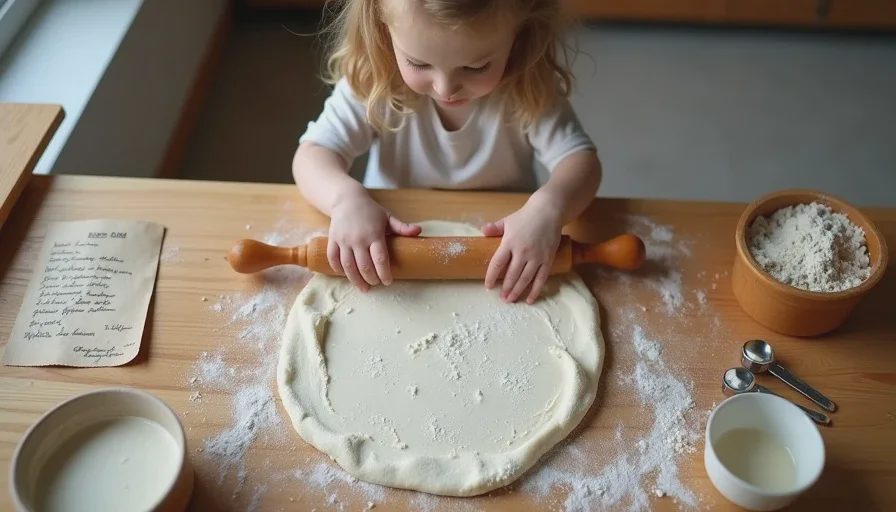
I roll the dough to about 1/8 inch thick — any thicker and it's a slab, any thinner and it tears when you move it. I don't measure with a ruler. You get a feel for it after about your tenth crust, and June is getting there faster than I did because she's nine and has smaller, colder hands.
Pecan Pie — The Test Case
Pecan pie is the recipe I use to test every crust technique because the filling is forgiving and the crust is the whole show. If the crust works with pecan pie, it'll work with anything. Here's the ingredient list I use, adapted from my mom's card with a few margin notes from my own trial and error:
Ingredient | Amount | Note |
|---|---|---|
All-purpose flour | 2 cups | Spooned and leveled, not scooped |
Salt | 1 teaspoon | Kosher, not table salt |
Unsalted butter | 10 tablespoons, cold | Check temp with probe — aim for 40°F |
Shortening | 3 tablespoons, cold | Butter alone is harder to work with |
Ice water | 5–7 tablespoons | Add one at a time, check dough temp |
Pecan halves | 2 cups | Toast them first at 350°F for 8 minutes |
Corn syrup | 1 cup | Dark syrup for deeper flavor |
Brown sugar | 1 cup, packed | June measures this one |
Eggs | 3 | Room temperature |
Melted butter | 3 tablespoons | For the filling |
Vanilla extract | 1 teaspoon | Not imitation — I can taste the difference |
June measures the brown sugar because she likes packing it down with the back of a measuring cup, and she's more precise about it than I am. Sam tried to help once and put his whole hand in the flour bag, so he's been reassigned to smoke supervision. Kate stays out of the baking zone entirely, which is smart on her part.
What I'd Tell Anyone Starting Out
If you're working from a handwritten recipe card and your crust keeps coming out wrong, the problem probably isn't the recipe. It's the temperature. My mom's recipe was right — the butter needs to be cold. She just didn't have a probe thermometer, and she didn't need one because her hands were colder than mine and she'd made a thousand crusts by the time I was born. I needed the instrument to compensate for what she had in muscle memory.
Start with the butter at 40°F. Check the dough at 48°F. Roll to 1/8 inch. Don't overwork it. Chill it if it gets warm. And when the pecan pie comes out of the oven with a crust that actually flakes when you cut into it, you'll understand why a BBQ thermometer ended up in my baking drawer. Good smoke. Good sweets. Good people.

No notes yet — write the first one.