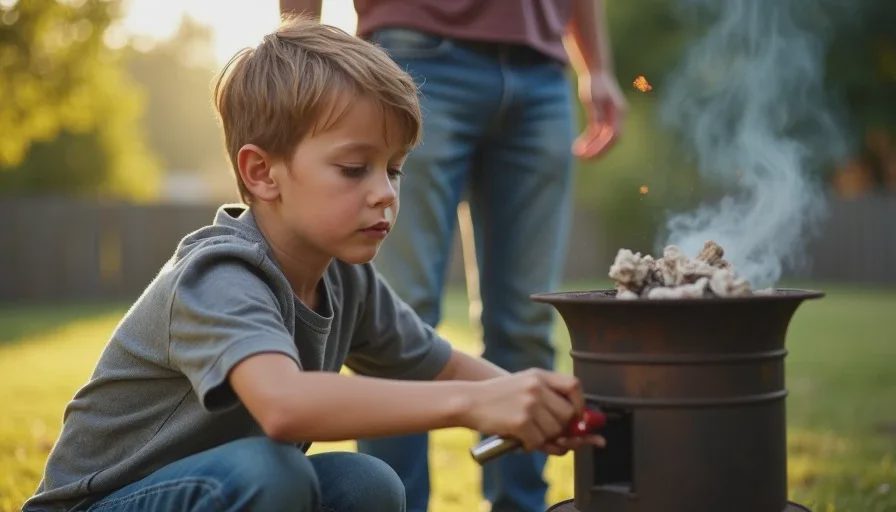
Writing this Lockhart BBQ blog has taught me that some lessons don't come from a recipe card — they come from watching your seven-year-old try to light a charcoal chimney for the first time and realizing you can't rush fire any more than you can rush a brisket. This is about Sam, a chimney starter, and a Saturday morning in our backyard that turned into the clearest lesson in patience I've had all year. If you've ever wondered whether a kid can handle real fire responsibility, the answer is yes — with structure, rules, and the willingness to stand behind their shoulder for fifteen minutes without grabbing anything out of their hands.
Why Charcoal, Not Wood
Starting With What a Kid Can Manage
Old Hoss runs on split oak logs. That fire takes experience — knowing when to add a stick, how to read the smoke color, when to open or close the damper. I wouldn't hand a seven-year-old a split log and a match. But a charcoal chimney? That's a contained, predictable, repeatable process. It's the right starting point for a kid who wants to help but doesn't yet understand why fire does what it does.
A backyard BBQ setup on a budget usually starts with charcoal anyway. The chimney starter is an $18 piece of equipment that does one thing well: it lights charcoal without lighter fluid. If Sam can learn to use it safely, he's learning the foundation of every cook I do — fire management, patience, and respect for what heat can do.
The Backyard in Lockhart as Classroom
We live about ten minutes from Kreuz Market and Smitty's, right here in Lockhart. Sam has been smelling brisket smoke since he was in a car seat. When I told him he was going to learn to light the chimney himself, his eyes went wide. Kate was watching from the kitchen window, and I could see her expression through the glass — equal parts pride and concern about his eyebrows.
Here's the step-by-step guide I used with Sam, written so you can follow it with your own kid:
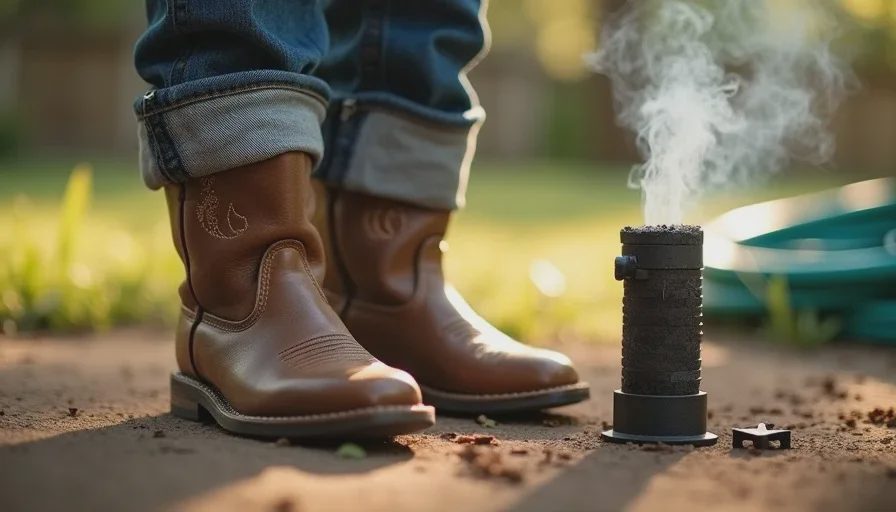
Suit up — Closed-toe shoes, no loose sleeves, hair tied back. Sam's cowboy boots and a t-shirt were fine. I made him roll his sleeves up past his elbows.
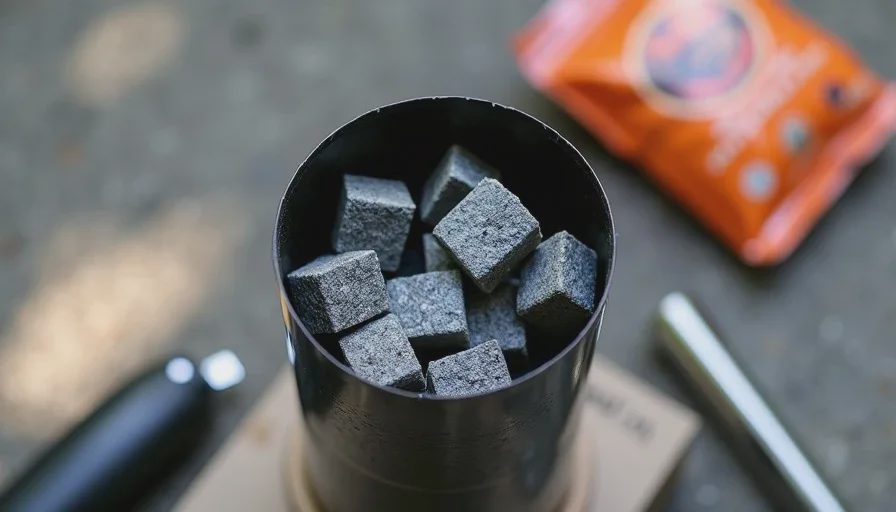
Load the chimney — Fill the chimney with charcoal to the top. Sam wanted to stuff briquettes in by hand one at a time. I showed him how to pour from the bag so they settle naturally. Don't pack them tight.
Place the starters — Two crumpled newspaper sheets or two fire starter cubes under the chimney grate. We use newspaper because it's free and I always have the Lockhart Post-Register sitting on the front porch.
Light the paper — This is the step Sam had been waiting for. Long-stick lighter, not matches. Touch the flame to the newspaper in two places. Step back two feet.
Watch the smoke, then the flame — The first two minutes produce smoke. Lots of it. Sam panicked. I told him that's normal — the newspaper is burning and the charcoal is catching from below. Wait.
Wait 15 minutes — This was the hard part. Nothing to do but watch. I explained that the charcoal needs time to light from the bottom up. You can't speed it up. You can't poke it. You wait.
Check for gray ash — At 15 minutes, the coals on top should have a light gray ash coating. If they're still black, give it five more minutes. Sam checked at 12 minutes and was disappointed. I made him wait.
What Sam Understood and What He Didn't
The Fire Metaphor He Taught Me
Sam understood the steps. He could recite them back: load, place, light, wait, check. What he didn't understand was the waiting — why nothing was happening for fifteen minutes when he'd lit the fire and expected flames immediately. He kept asking, "Is it going yet? Is it going yet?"
And here's where it hit me: I do the same thing with the offset smoker. I light the firebox, and by minute ten I'm checking the temperature, adjusting the damper, adding a log before the last one has even burned down. Sam was showing me what impatience looks like from the outside. You can't rush fire. You set the conditions and you let it do what it does. That's fire management, whether it's a chimney of charcoal or a full offset smoker burn for a twelve-hour brisket.
What Kate Saw From the Window
Kate told me later that she watched Sam pace in a circle around the chimney for the full fifteen minutes, occasionally crouching down to peer at the coals from the side. She said he looked like a tiny foreman inspecting a job site. She also said she was glad I was the one standing next to him and not her, because she would have told him to just use the lighter fluid and get it over with.
That's exactly why charcoal matters. Lighter fluid teaches nothing. A chimney teaches patience.
Safety Checklist
Safety Rule | Why It Matters | What Sam Learned |
|---|---|---|
No loose sleeves | Fabric catches near open flame | Rolled up past elbows before touching the chimney |
Long-stick lighter only | Keeps hands 12+ inches from flame | Matches are for birthday candles, not for charcoal |
Never look down into the chimney | Heat rises — flare-ups happen upward | Check from the side at arm's length |
Don't touch the chimney after lighting | Steel reaches 600°F+ within minutes | Only the wooden handle is safe to touch |
Keep a water source nearby | Stray sparks can reach dry grass | Garden hose within reach, turned on and ready |
One person lights, one person watches | No crowding the fire area | Sam lit, I stood behind his right shoulder |
The Moment the Coals Were Ready
At 17 minutes, I had Sam look at the top of the chimney. The briquettes had a layer of gray ash, and when the wind shifted, he could see the orange glow underneath. "That's fire, Dad." He said it quietly, like he was seeing something for the first time. I dumped the coals into the kettle grill, and he watched them spread and glow brighter in the open air.
We cooked hot dogs on that fire. Not brisket, not ribs — just hot dogs. Sam ate two and told June he'd "lit the fire himself." June rolled her eyes, which is the nine-year-old version of respect. Kate came outside with a plate of buns and said, "Not bad, Sammy." He looked like he'd won a trophy.
Why This Matters More Than the Cook
I started this Lockhart BBQ blog to write about smoke and recipes, but the honest truth is that the cooking is just the vehicle. What I'm really doing out there on Saturday mornings is spending time with my kids in a way that doesn't involve a screen, a schedule, or a carpool line. Sam learned to light a fire. I learned to stop rushing mine.
A backyard BBQ setup on a budget is really about this — giving yourself and your family a reason to stand outside together and wait for something good. The chimney cost 10. The fifteen minutes of patience Sam learned is worth more than anything I've bought for the smoker.
Next weekend he wants to try adding a wood chunk to the coals. I told him we'd talk about it. One fire at a time.
Good smoke. Good sweets. Good people. That starts with a kid, a chimney, and the willingness to wait seventeen minutes without touching anything.
No notes yet — write the first one.