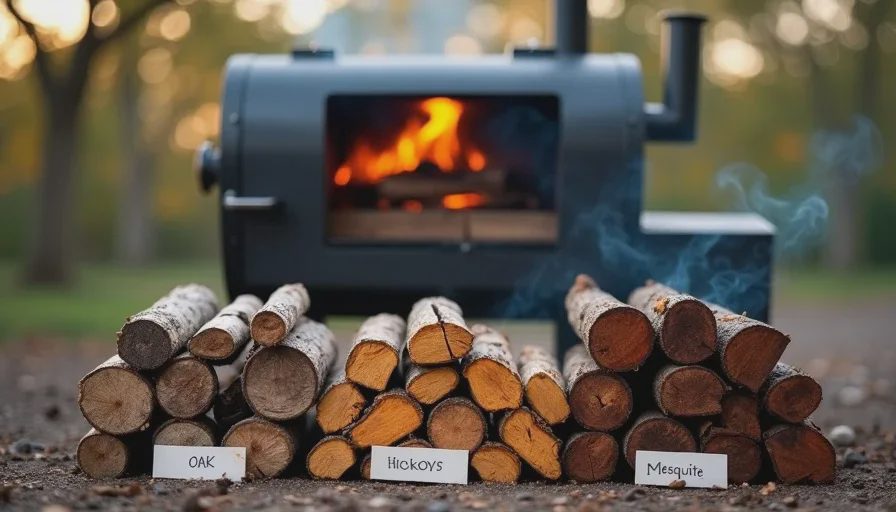
Offset smoker fire management begins with understanding the wood you're burning, and in Central Texas, that conversation starts and ends with post oak — but it shouldn't end there. I've cooked on oak, hickory, mesquite, pecan, and combinations of all four, and each one changes your fire, your flavor, and your cook time in ways that matter. If you want to know how to keep a smoker fire at 225 with wood that actually works for the meat you're cooking, this is where we start. No chemistry degree required — just a backyard, a firebox, and a willingness to pay attention. Offset smoker fire management isn't complicated once you know what each wood does, but it took me four years of burning the wrong combinations to figure that out.
The Three Woods You Need to Know
Post Oak: The Central Texas Standard
Post oak is what makes Lockhart barbecue taste like Lockhart barbecue. It's a dense white oak that grows across the Texas Hill Country, burns hot and slow, and produces a clean, mild smoke that doesn't overpower the meat. I burn post oak on Old Hoss for every brisket I cook, and I've never once wished I'd used something else. The smoke is sweet and subtle — you taste the beef first and the smoke second, which is exactly the right order.
Post oak burns at roughly 250-275°F surface temperature on a split, which means in an offset smoker with good airflow, it holds your cook chamber at 225-250°F without fighting you. It seasons in 6-12 months, doesn't spark much, and the coals it leaves are dense and long-lasting. I buy a half-cord every September from a guy outside Luling who cuts it specifically for smoking. If you can only get one wood, get post oak.
Hickory: The Sweet Middle Ground
Hickory is the wood I reach for when I want more flavor than oak but less than mesquite. It burns slightly hotter than oak, produces a sweet, bacon-like smoke, and pairs well with pork shoulder, ribs, and poultry. I use hickory for pulled pork for a crowd every time — that sweetness complements the fat in pork in a way oak alone doesn't.
The thing about hickory is it's easy to overdo. Too many hickory splits and your meat tastes like a smokehouse floor — not the good kind. I mix hickory with post oak at a 1:3 ratio: one hickory split for every three oak splits. That gives you the sweetness without the sledgehammer. If you're running a backyard setup and buying hickory, look for splits, not chips. Chips burn too fast and don't build coals.
Mesquite: Handle With Care
Mesquite is the wood that ruined my first brisket. It's aggressive, it's bitter in quantity, and it's everywhere in Texas, which makes it tempting. Mesquite burns hot — 300°F+ on a split — and produces a thick, sharp smoke that will coat your meat in creosote before you know what happened. I used a full mesquite fire on a brisket in 2019, and Kate said it tasted like "eating a campfire." She was being generous.
Mesquite has its place, but that place is small. I use it for grilling — direct heat, quick cooks, steaks and chops — where the smoke doesn't have time to build up. For low-and-slow offset cooking, I use mesquite as a flavor accent: one small split at the start of the cook, mixed with oak, and that's it. If you're from West Texas, you'll fight me on this, and I understand — mesquite is your wood. But I've seen too many beginners pile mesquite into an offset smoker and produce bitter, acrid meat that nobody wants to eat twice.
The Wood Comparison Table
Here's what I've learned across four years of cooking on all three woods. This is from my cooking log — not from a book, not from a forum, from actual cooks on Old Hoss and the newer smoker:
Wood Type | Flavor Profile | Burn Temp (Split Surface) | Meat Pairing | Availability in Texas |
|---|---|---|---|---|
Post Oak | Mild, sweet, clean | 250-275°F | Brisket, pork shoulder, sausage | Abundant — Hill Country native |
Hickory | Sweet, bacon-like, strong | 275-300°F | Pork shoulder, ribs, poultry, bacon | Moderate — East Texas, imports |
Mesquite | Sharp, earthy, aggressive | 300°F+ | Grilling: steak, chops. Low-and-slow: accent only | Abundant — West and South Texas |
Pecan (bonus) | Nutty, mild, sweet | 250-260°F | Pork, poultry, cheese | Moderate — river bottoms, Central TX |
Wood Selection Checklist
Before you buy or burn, run through this:
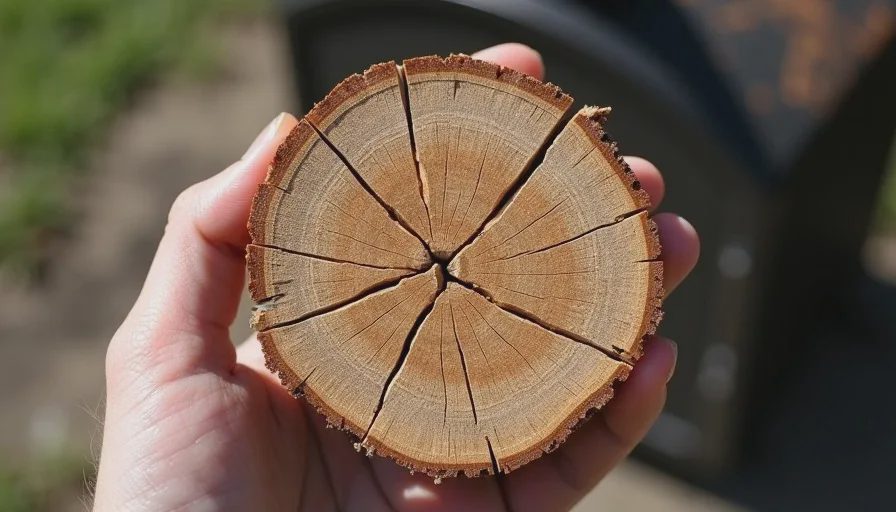
Is it seasoned? Wood should have 20-30% moisture content. Too green = dirty smoke. Too dry = burns too fast, no flavor. Split a piece and feel the inside — it should look dry but not bone-white. Seasoned wood cracks at the ends, green wood doesn't.
Is it split, not chipped? Chips are for gas smokers and electric smokers. On an offset, you need splits — 3-4 inch diameter, 12-16 inches long, split from rounds. Chunks are OK if that's all you can get, but splits build better coals.
Does it smell right? Hold a fresh-split piece to your nose. Oak smells mild and oaky. Hickory smells sweet and smoky. Mesquite smells sharp and almost spicy. If it smells moldy or sour, don't burn it — that mold will transfer to your meat.
Is it the right wood for the meat? Oak for brisket. Hickory for pork. Mesquite for quick grills. Pecan for pork and poultry. Mix if you want, but start with one and learn it before you blend.
How Wood Moisture Affects Smoke Quality
Seasoned vs. Green Wood
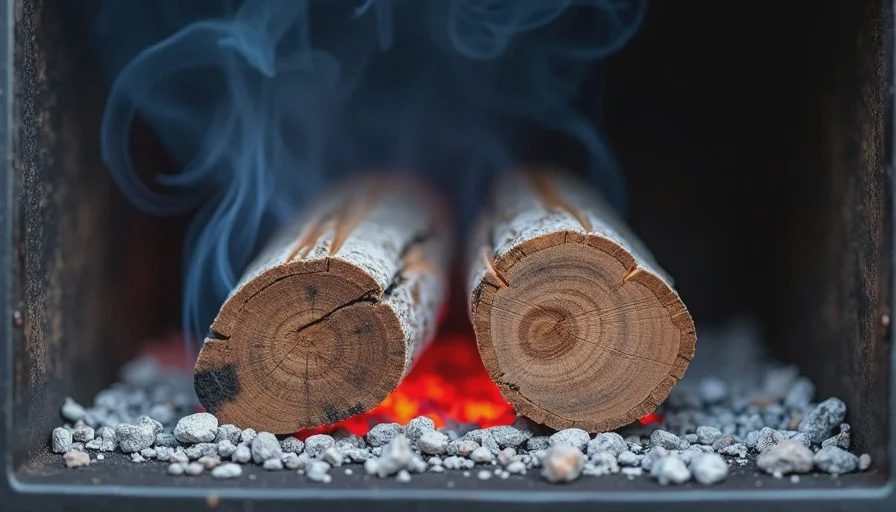
This is the single most common mistake I see in backyard smoking: using wood that's too green. Green wood — freshly cut, not dried — has 40-60% moisture content, and when you put it on coals, all that water has to evaporate before the wood can burn clean. What you get is thick white smoke that looks impressive and tastes terrible. That smoke is full of creosote, unburned particulates, and water vapor, and it coats your meat in a bitter layer that no sauce can fix.
Seasoned wood — 6 to 12 months split and stacked under cover — has dropped to 20-30% moisture. It catches fast, burns clean, and produces that thin blue smoke you're looking for. I keep my post oak split and stacked under a metal roof in the side yard, and I bring a batch inside the garage to pre-warm before every cook. Warm, dry wood catches clean on the coals. Cold, damp wood smolders and makes your meat bitter. This is the foundation of offset smoker fire management — if your wood is wrong, nothing else matters.
The Moisture Test Without a Meter
I don't own a wood moisture meter. I check it this way: take a split, knock it against another piece of wood. If it sounds hollow and sharp — like two baseball bats clacking — it's seasoned. If it sounds dull and thuddy — like hitting a wet sponge — it's still green. You can also look at the ends: seasoned wood has checks (cracks radiating from the center), green wood doesn't. Not scientific, but it's worked for my grandfather, my dad, and me.
How Wood Choice Affects Fire Management
The Rhythm Changes With the Wood
Different woods burn at different rates, which means your fire management rhythm changes depending on what's in the firebox. Here's what I've found on Old Hoss:
Wood | Splits Per Hour | Coals Build | Temp Stability |
|---|---|---|---|
Post Oak | 1-1.5 | Slow, dense, long-lasting | Very stable — holds 225°F with minimal fuss |
Hickory | 1.5-2 | Moderate, medium density | Stable but runs slightly hot — watch the 250°F line |
Mesquite | 2-2.5 | Fast, hot, burns through quickly | Unstable for low-and-slow — spikes to 275°F+ easily |
Pecan | 1-1.5 | Slow, similar to oak | Very stable — comparable to post oak |
Post oak is the easy wood. If you're learning offset smoker fire management and figuring out how to keep a smoker fire at 225, start with post oak and don't switch until you've got the rhythm down. Hickory is your second wood — it rewards you for the skills oak taught you. Mesquite is for after you've earned the right to make mistakes with it, and even then, use it sparingly.
Mixing Woods: What Works
I mix woods for specific meats, and here's what I've found works:
Brisket: 100% post oak. Don't mess with it. This is Central Texas tradition because it works.
Pork shoulder: 3 parts post oak, 1 part hickory. The hickory adds sweetness that pork loves.
Ribs: 2 parts post oak, 1 part pecan or hickory. Milder smoke, shorter cook.
Poultry: 2 parts pecan, 1 part post oak. Pecan is gentle and doesn't turn skin bitter.
Sausage: Equal parts post oak and hickory. Bold smoke for bold meat.
I tried mesquite on a pork shoulder once — two splits mixed with oak. The smoke was interesting but edgy, and Kate picked it out immediately. "What's different about this one?" she said, which is either a compliment or a complaint depending on the tone. It was a complaint.
The Takeaway
Wood is the ingredient you can't fake. You can buy the right meat, run the right temperature, and time it all correctly, but if your wood is wrong — too green, too much mesquite, wrong species for the cook — none of it matters. Start with post oak. Learn its rhythm. Add hickory when you're ready. Approach mesquite with caution and respect. And always, always smell a fresh split before you put it on the fire. That's offset smoker fire management in a nutshell — the wood tells you everything you need to know if you're paying attention.
Good smoke. Good sweets. Good people.
No notes yet — write the first one.