My first rack of ribs with Memphis style barbecue rub was a mess. I poured on too much sugar, ran the smoker hotter than I realized, and ended up with black edges and a sticky crust that tasted like burned candy. The fix was not complicated: less sugar, more savory seasoning, and a steady fire around 250 F. This blend gives you a deep, peppery bark without requiring a competition trailer or a pantry full of odd ingredients.
What Makes This Rub Taste Like Memphis
Memphis barbecue is built around pork, dry seasoning, smoke, and restraint. The rub should support the meat instead of hiding it under a thick sauce. A good Memphis style barbecue rub usually starts with paprika for color, kosher salt for seasoning, and black pepper for a sharp finish. Garlic powder, onion powder, and a small amount of chili powder fill out the middle.
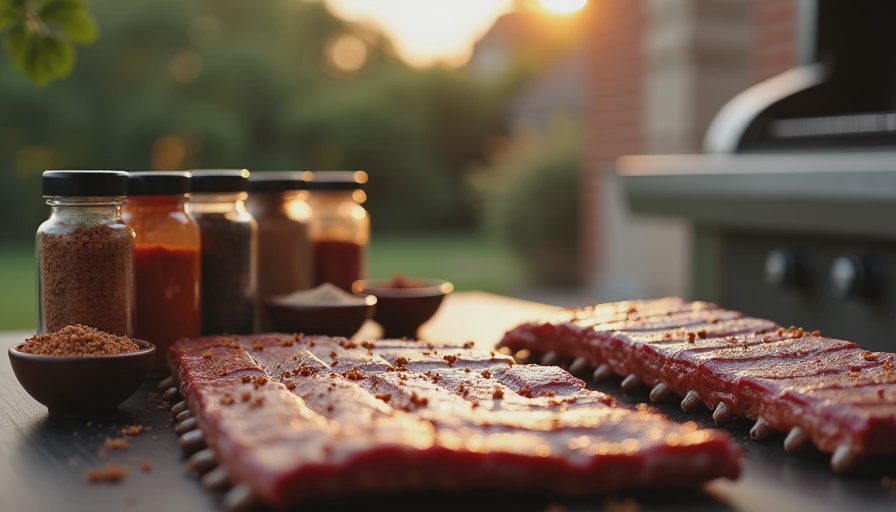
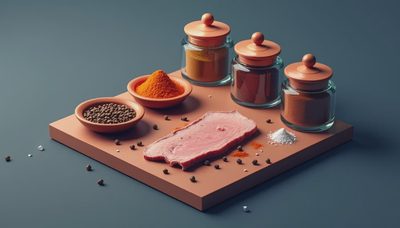
Brown sugar belongs in the mix, but it should not dominate. I use enough to help the bark bronze and balance the pepper, not enough to make the ribs taste like dessert. For a batch that covers two racks of spare ribs, combine 1/2 cup paprika, 1/4 cup brown sugar, 2 tablespoons kosher salt, 2 tablespoons coarse black pepper, 1 tablespoon garlic powder, 1 tablespoon onion powder, 2 teaspoons chili powder, and 1 teaspoon cayenne. That makes a savory Memphis style barbecue rub with moderate heat.
If your family prefers mild barbecue, leave out the cayenne and let people add hot sauce at the table. June and Sam eat ribs more happily when the heat stays in the background. I can always shake extra pepper onto my own plate after the football comes on.
How to Apply the Rub Without Making a Gummy Mess
The biggest application mistake is sprinkling seasoning onto wet meat and immediately piling it into the smoker. Excess moisture turns the surface into paste, especially when sugar is involved. Pat ribs, pork shoulder, or chicken dry with paper towels first. Remove the membrane from the bone side of ribs, then apply a thin coat of yellow mustard or neutral oil if you want the seasoning to cling. You will not taste the mustard after cooking.
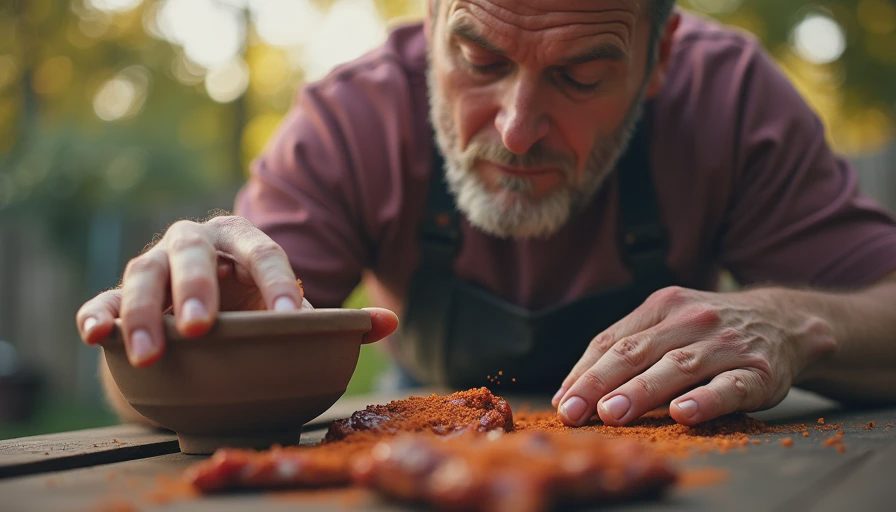
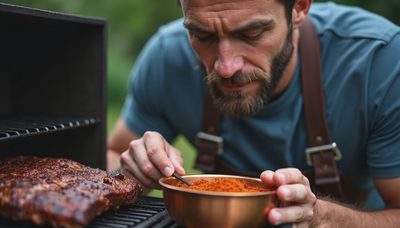
Use about 1 tablespoon of Memphis style barbecue rub per pound of meat as a starting point. Spread it evenly from edge to edge, then press it into the surface instead of rubbing aggressively. Hard rubbing can move seasoning around and leave bare spots. Let the meat sit for 20 to 30 minutes while the smoker comes up to temperature. For a pork shoulder, refrigerating it uncovered for four to twelve hours gives the salt more time to work, but an overnight rest is not mandatory.
Do not wrap freshly seasoned meat in plastic if you are chasing a dry bark. The trapped moisture softens the coating. A baking sheet and refrigerator shelf are enough for most home cooks.
The Best Wood and Temperature for This Blend
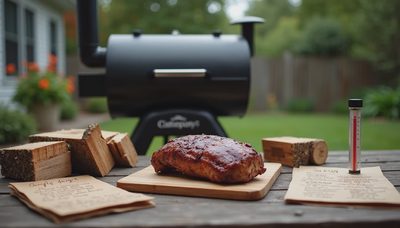
I reach for hickory when using this Memphis style barbecue rub because it gives pork a firm, bacon-like smoke that stands up to paprika and pepper. Apple or cherry works too, especially for chicken or ribs when you want a lighter smoke. Avoid soaking wood chunks until they steam. Dry chunks burn more predictably in a charcoal smoker, while a gas grill needs a smoker box or foil packet with holes.
Run the cooker between 235 and 265 F. The exact number matters less than avoiding wild swings. At 250 F, spare ribs usually take about five to six hours, while a pork shoulder can take eight to twelve hours depending on size and tenderness. Those are planning numbers, not promises. Meat is done when it feels tender, not when a clock says so.
For ribs, look for the meat pulling back slightly from the bones and a surface that does not smear when touched. For shoulder, a probe should slide into several parts of the roast with little resistance, often around 195 to 205 F internal temperature. Rest shoulder for at least 45 minutes before pulling it.
Adjusting the Rub for Ribs, Shoulder, and Chicken
Ribs can handle the full Memphis style barbecue rub as written. Spare ribs have enough fat and connective tissue to balance the salt and pepper, and the longer cook gives the sugar time to darken. Baby back ribs are leaner, so use a slightly lighter coating and start checking them earlier.
For pork shoulder, I reduce the brown sugar by half and add another tablespoon of black pepper. A large roast has a lot of meat to season, and extra pepper keeps the pulled pork from tasting flat after shredding. I also save a few spoonfuls of the seasoning to mix into the finished pork with a splash of apple cider vinegar.
Chicken needs a lighter hand. Use roughly half the amount per pound, particularly on wings and thighs. Poultry skin can become salty quickly, and sugar can burn before the chicken finishes. Cook chicken to 165 F in the thickest part, then rest it briefly before serving.
Common Problems and Quick Fixes
If the bark is bitter, the fire probably ran too hot or the meat sat over dirty smoke. Thick white smoke often means the wood is smoldering instead of burning cleanly. Open the firebox vent slightly, improve airflow, and wait for a thin blue-gray stream before continuing.
If the crust is pale, your cooker may be running cool, the meat may have been too wet, or you may have wrapped it too early. Let the surface dry and develop color before wrapping. I usually wait until the bark is mahogany and feels set, often around 160 to 170 F internal temperature for pork.
If the final meat tastes salty, the cure was too heavy or the salt was fine-grained rather than kosher. Salt crystals differ by brand, so weigh the batch if you make it often. A practical starting ratio is one part salt to four or five parts total seasoning by volume, then adjust after a small test cook.
Make a Batch for the Weekend
Mix Memphis style barbecue rub in a clean jar and shake it thoroughly so the heavier salt does not settle at the bottom. Label the date and keep it sealed in a cool cabinet. It will stay useful for several months, although the paprika and black pepper smell brightest during the first few weeks.
Before committing a whole pork shoulder, test the blend on two chicken thighs or a small rack of ribs. That lets you adjust heat, sweetness, and salt without wasting Saturday's dinner. I learned that lesson after an expensive brisket and a very quiet dinner table.
Serve the meat with white bread, slaw, pickles, or beans. Sauce can sit on the side rather than covering the bark you worked to build. Start with this Memphis style barbecue rub, hold the smoker near 250 F, and pay attention to the surface. Good smoke. Good sweets. Good people.
No notes yet — write the first one.