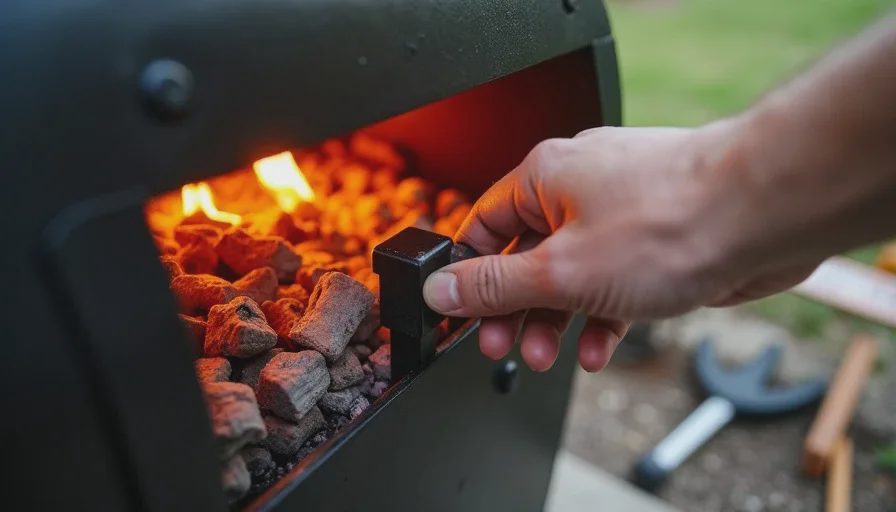
Learning how to keep a smoker fire at 225 isn't about buying better equipment — it's about understanding why your fire quits on you at the worst moment. I've been there enough times. Hour 4 of a brisket cook, everything's going fine, and then the temp starts sliding. You walk out, open the firebox, and find a pile of gray ash where your fire used to be. The brisket stalls, you panic, you start throwing wood in like it's a bonfire, and now you're at 300°F. Ask me how I know.
The Problem: Hour 4 Blues
Hour 4 is the danger zone. Not because of anything mystical — it's just physics catching up with you. Here's what happens: you started with a full firebox, the wood was burning clean, and the temp held steady. But wood burns from the top down in a firebox, and by hour 4, you've burned through your initial load. If you haven't been adding fuel on a schedule, you're running on embers. And embers at 225°F don't last long when the wind picks up.
Why It Always Dies at Hour 4
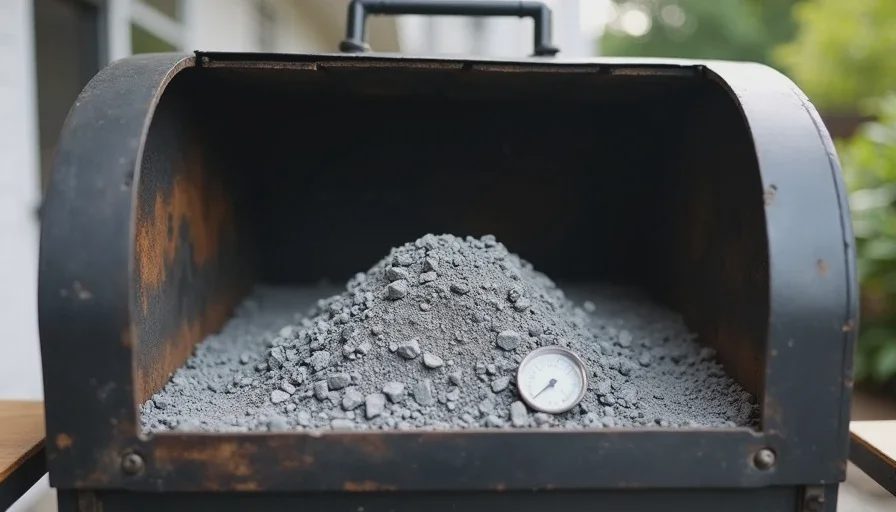
Three things converge at the four-hour mark. First, your original fuel load is consumed. Second, ash has accumulated in the bottom of the firebox, blocking the airflow that feeds the fire. Third — and this is the one nobody talks about — your wood was probably too wet to begin with, and it took four hours for the moisture to cook out enough to burn properly, at which point there wasn't enough left to sustain a fire. I went through six briskets before I figured this out.
The Diagnosis: Three Things Killing Your Fire
Let me walk through each one, because if you fix all three, your fire will run all day. The first one is the most common culprit by far.
Airflow Is Everything
A fire needs three things: fuel, heat, and oxygen. When people have trouble holding 225°F, they almost always blame the fuel. Nine times out of ten, it's the oxygen. Your firebox intake vent should be open enough to draw air across the coals and out the stack. If the intake is barely cracked because you're "running hot," you're suffocating the fire. The exhaust stack damper should be fully open or nearly so — the chimney effect is what pulls air through the cooker.
Here's a rule I learned from a competitor at the Lockhart cook-off: if your fire is struggling, open the intake before you add wood. More often than not, the fire recovers on its own.
Wood Moisture
I store my post oak under a tarp in the backyard. Last spring, after a week of rain, I grabbed some splits and threw them on. White smoke, temp dropped 40 degrees, and I spent an hour fighting it. Wet wood doesn't burn — it smolders. Smoldering wood produces bitter, creosote-heavy smoke that'll ruin a brisket in 20 minutes. If you can't split a log and feel dry wood inside, don't put it on the fire.
The $12 Fix
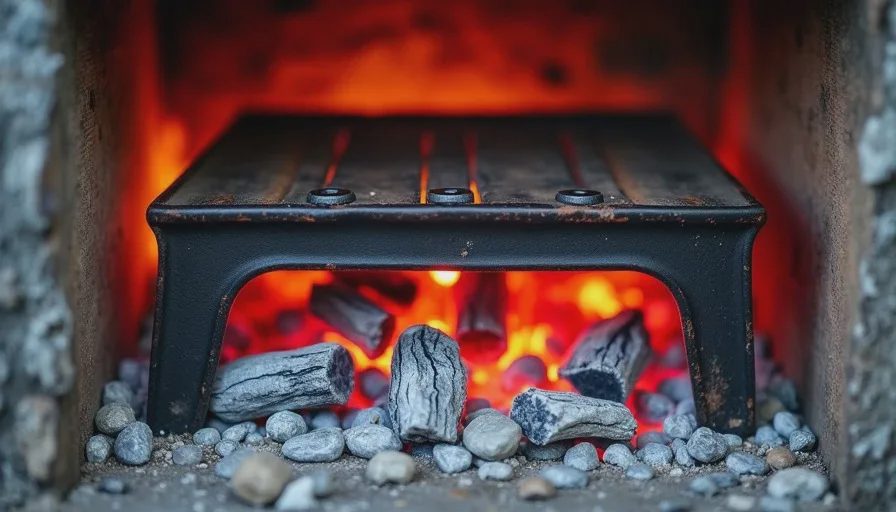
Here's the fix that changed everything for me. Go to a hardware store and buy a 12-inch cast-iron grate lifter — the kind they sell for fireplaces. It costs about $12. Use it to elevate your fire grate about two inches off the floor of the firebox. That's it. Two inches of clearance under the grate lets ash fall through instead of smothering your coals. Air circulates under the fuel, and your fire burns clean and steady.
I did this modification to Old Hoss two years ago, and I haven't lost a fire to ash buildup since. Before the fix, I was pulling the ash grate out every hour during a cook to clean it. Now I check it once at hour 3 and once at hour 6, and that's it.
The second half of the $12 fix is a vent management habit. Keep your intake between half and three-quarters open for a 225°F target. If the temp creeps up, don't slam the vent shut — close it by a quarter turn at a time. Smashing the vent closed kills the fire and creates dirty smoke. Small adjustments, five minutes apart. That's how to keep a smoker fire at 225 without fighting it all day.
Troubleshooting: Symptom, Cause, Fix
Symptom | Likely Cause | Fix |
|---|---|---|
Temp dropping at hour 4 | Ash blocking airflow | Clear ash grate, open intake |
White billowing smoke | Wet wood | Use dry splits, test-split before adding |
Temp spiking past 300°F | Intake too open | Close intake by quarter turns, let coals settle |
Bitter tasting meat | Dirty smoke from smoldering | Open intake fully, let fire burn clean first |
Fire won't stay lit | Wood too wet or intake blocked | Dry wood, clear ash, check vent movement |
Temp swings 30°F or more | Inconsistent fuel loading | Add splits on schedule, not when temp drops |
Minion Method vs. Log-Burn
Two ways to run an offset smoker. The log-burn method is what I use on Old Hoss: start a hot fire, burn it down to coals, and add splits every 45-60 minutes. The minion method — more common on kettle and bullet smokers — uses a full basket of unlit charcoal with a few lit coals on top. The fire slowly works its way through the basket over 12+ hours.
Method | How It Works | When to Use | Drawbacks |
|---|---|---|---|
Log-burn | Hot fire, add splits every 45-60 min | Offset smokers, post oak | Requires attention, can spike temps |
Minion | Full basket, lit coals on top | Kettles, WSM, Kamado | Less smoke flavor, needs quality charcoal |
Hybrid | Charcoal base, wood splits for flavor | Offset smokers with tight temp control | More setup, flexible fuel |
I run the hybrid on Old Hoss most weekends. A bed of lit charcoal for stable heat, with post oak splits added every hour for smoke flavor. It gives me the consistency of charcoal with the taste of real wood.
Fire Management Checklist
Before any long cook, I run through this list. It takes 10 minutes and has saved more briskets than I can count.
Fire grate is clear and elevated (the $12 fix)
Intake vent moves freely — no rust, no grease buildup
Exhaust stack damper opens fully
Wood splits are dry — test-split one and check the interior
Ash from the last cook is cleaned out
Charcoal basket is full if running hybrid
Thermometer is calibrated — test in boiling water
Water pan is full if using one (helps with temp stability)
Fuel staging area is set up — keep splits near the firebox so they warm up before going on
Running through this list is the difference between a 12-hour brisket cook where you relax and watch football, and one where you're out at the smoker every 20 minutes wondering why the temperature dropped.
The Difference Between 225 and "Close Enough"
A lot of backyard cooks will tell you 225 is a magic number. It's not magic — it's a target that gives you a wide window for error. At 225°F, a brisket takes about 1.5 hours per pound, and you have maybe a 30-minute window either side of your target before you're in trouble. At 275°F, that window shrinks to 10 minutes. Lower temps give you time. Higher temps give you less time to react when something goes wrong — and something always goes wrong.
Hold 225°F, give yourself that buffer, and you'll turn out better brisket without the stress. The fire won't die on you at hour 4 if you've set it up right. And if it does, you'll know exactly where to look.
Good smoke. Good sweets. Good people.

No notes yet — write the first one.