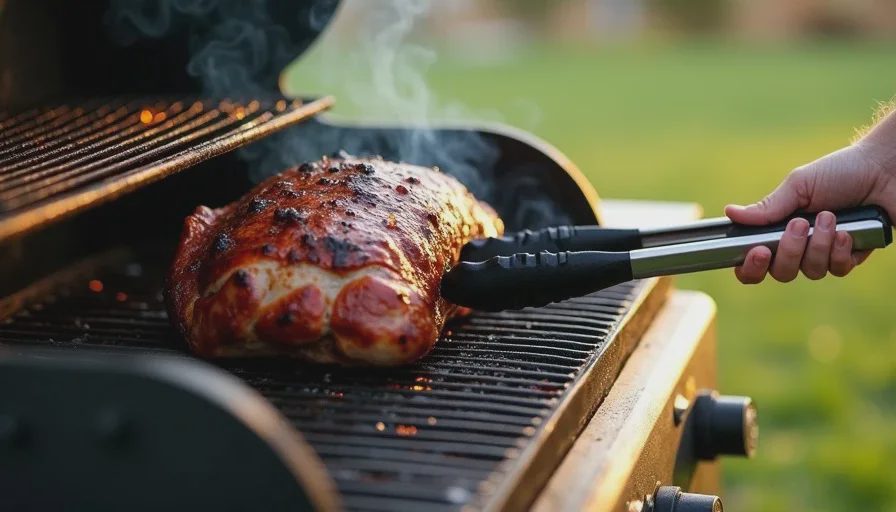
Pulled pork for a crowd is the cook that saved my backyard BBQ reputation more times than I can count, and it will save yours too. I'm not proud of how many briskets I dried out before I figured out pork shoulder, but I am grateful that a cheap hunk of pork taught me what forgiveness looks like in a smoker. If you're running a backyard BBQ setup on a budget and feeding twenty-plus people, this is the cook you lean on when everything else goes sideways. Pulled pork for a crowd doesn't care if you overslept, if the football game distracted you, or if your fire ran hot for an hour — it absorbs the punishment and still comes out tender.
Why Pulled Pork Bails You Out Every Time
The Fat Does the Work for You
Here's what I learned the hard way: brisket has one narrow window where it goes from tough to dry, and if you miss it, you're eating shoe leather at the party. Pork shoulder — also called Boston butt — sits at around 20% fat and has a wide window of forgiveness. You cook it to 195°F, it's good. You cook it to 205°F, it's great. You accidentally let it ride to 210°F because Sam needed help with his math homework? Still good. The intramuscular fat renders down over hours, basting the meat from the inside, and that margin for error is exactly why pulled pork for a crowd works when everything else fails.
I remember one Saturday in October — Texas Longhorns were playing at 11 AM, and I had a brisket on Old Hoss that I'd lit at 5 AM. By halftime, I'd neglected the fire, the temp had spiked to 290°F, and that flat was done for. Dry as the backside of a Blackland Prairie August. But I had a pork shoulder in the fridge, and that shoulder went on at 1 PM, cooked steady at 225-250°F, and by 6 PM I was feeding fifteen neighbors pulled pork sandwiches on cheap buns with my Texas-style sauce. Nobody remembered the brisket. Well, Kate did, but she's kind.
How to Actually Cook It
Temperatures and Timing
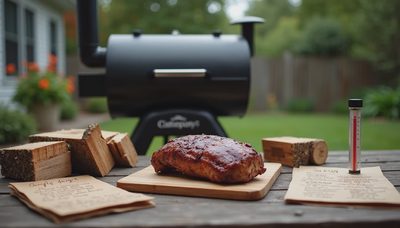
Let me give you the numbers that work every time. I cook pork shoulder at 225-250°F on the offset smoker, using post oak with a little hickory mixed in for sweetness. Here's the timeline I follow for an 8-pound shoulder:
Time | Temp (Grate) | Internal Temp | What's Happening |
|---|---|---|---|
0:00 | 250°F | 40°F | Meat on, cold from the fridge |
2:00 | 240°F | 140°F | Bark forming, smoke ring starting |
5:00 | 235°F | 160°F | The stall hits — this is normal, don't panic |
7:00 | 245°F | 175°F | Still stalling, fat rendering |
9:00 | 250°F | 190°F | Pushing through, collagen breaking down |
11:00 | 250°F | 200-205°F | Probe slides in like warm butter — pull it |
That stall around 160°F will make you think something's wrong. It's not. It's evaporative cooling — the moisture on the surface is cooling the meat as fast as the heat can warm it. I used to crank the heat to push through it, and all that did was rush the render and dry the outer layers. Let it ride. Go watch the game. Sam will tell you the temp alarm went off three times during the stall and Kate rolled her eyes each time, but that's just how it works.
Pulling at 205°F
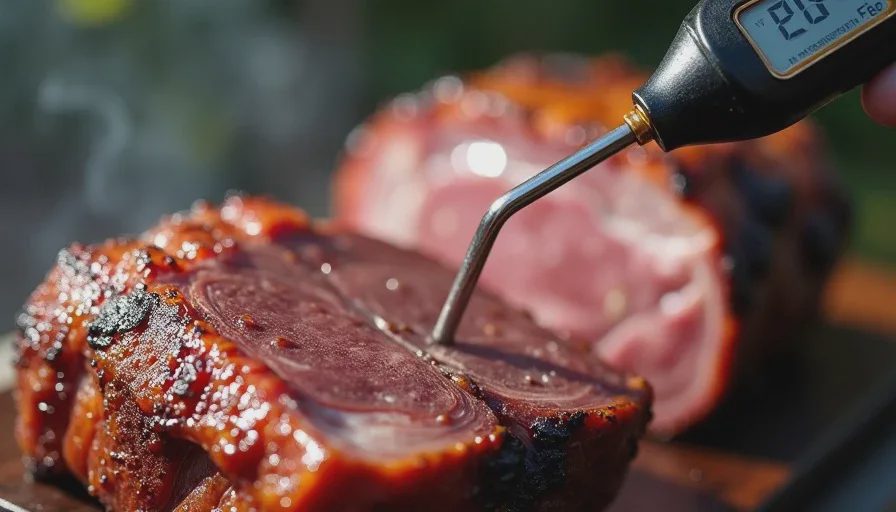
I pull pork shoulder at 205°F internal, no exceptions. I use a probe thermometer — same one I use for brisket — and when it slides into the thickest part of the shoulder with almost no resistance, like pushing a warm knife into a stick of room-temperature butter, it's done. If you feel any push-back, give it another 30 minutes. The collagen hasn't fully broken down yet, and that's the whole point of low and slow. Pulled pork for a crowd lives or dies on that internal temperature, not on the clock.
Feeding a Crowd on the Cheap
Cost Per Serving: The Real Numbers
This is where pulled pork for a crowd really earns its keep. I tracked costs from my last four cooks feeding groups of 15-25 people:
Meat | Cost per Pound | Yield (Cooked) | Servings per Pound | Cost per Serving |
|---|---|---|---|---|
Pork Shoulder | $2.29 | ~60% | 3-4 | ~0.76 |
Brisket | $4.50 | ~50% | 2-3 | ~2.25 |
Pork Ribs | $3.89 | ~55% | 1-2 | ~3.89 |
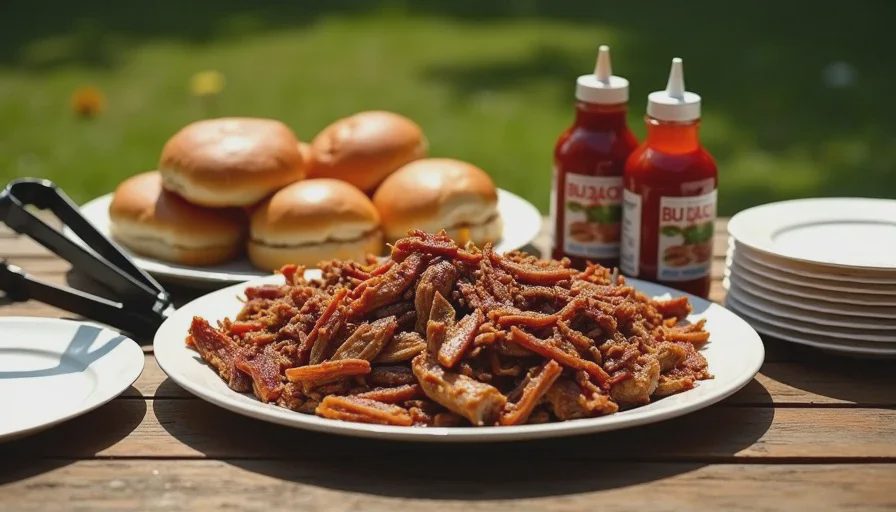
Pork shoulder feeds twice as many people per dollar as brisket, and three times as many as ribs. When Sam turned 9 in June and we had thirty kids and parents in the backyard, I cooked two 8-pound shoulders. Total cost: about $37. Add buns, a bag of slaw, and some pickles, and I fed thirty people for under sixty bucks. Try doing that with brisket.
Scaling Up
The beauty of pork shoulder is that scaling up is just adding another shoulder. Two shoulders fit side by side on Old Hoss, and they cook in the same time as one because the cook time depends on thickness, not weight. You're looking at 1.5 hours per pound regardless of whether you're cooking one or three — as long as they're roughly the same size. If I'm feeding 20-plus people, I cook two 8-pounders and I've never run short.
Sauce Options: Keep It Simple
I keep three sauces on the table when I serve pulled pork, and people can do what they want:
Texas-style (thin, vinegar-tomato): 1 cup ketchup, 1/2 cup apple cider vinegar, 1/4 cup brown sugar, 1 tbsp black pepper, 1 tsp cayenne. Simmer 15 minutes. This is the one I make every time.
Carolina-style (vinegar-pepper): 1 cup cider vinegar, 1 tbsp brown sugar, 1 tbsp coarse black pepper, 1 tsp red pepper flakes. No cooking — just shake it in a jar.
Kate's sweet mustard: 1/2 cup yellow mustard, 1/4 cup honey, 2 tbsp apple cider vinegar, pinch of celery seed. Mixed cold, served at room temp.
June measured out the brown sugar for the Texas-style sauce last weekend and didn't spill a single grain. She's nine and already more precise than I am.
Resting and Pulling
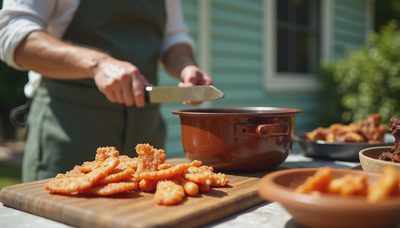
Rest the shoulder for at least 45 minutes in a cooler wrapped in foil and a towel. I use an old Yeti knockoff that Kate found at a garage sale, and it holds temp for hours. When you pull it, use two forks or — if you're lazy like me — your hands with nitrile gloves. Pull the bone out first; if it slides clean, you know the cook was right. Discard the big fat clumps, mix the bark pieces back in with the pulled meat, and hit it with a little sauce. That's it.
Good smoke. Good sweets. Good people.
The Takeaway
Pulled pork is the most forgiving cook in the backyard BBQ playbook. It's cheap, it scales, it tolerates your mistakes, and it feeds a crowd without making you sweat the bill. When brisket fails, when ribs dry out, when the football game distracts you from the fire — pork shoulder is standing there in the fridge waiting to save the day. Light it at 6 AM, pull at 205°F, and you'll be the neighbor everyone wants to live next to. And if you're running a backyard BBQ setup on a budget, there's nothing that gives you more food for less money.


No notes yet — write the first one.